
Are They Someone You Would Choose?

Have you ever considered how the people in your life got there?
Not just romantic partners. Friends, family members, the people we work with, even relationships we may have outgrown without realizing it. The people we continue making room for because we have history with them, because we love them, because we feel loyal to them, or simply because they’ve been there so long that we’ve never really stopped to ask whether we would choose the relationship as it exists today.
A recent conversation made me look at this differently.
I reconnected with someone I knew a very long time ago. There was history between us, and apparently more feeling on his side than I understood at the time. Looking back now, I can see my own part in how things unfolded. I was young. I was immature. I made choices without fully understanding how those choices might affect someone else.
I can own that today without turning it into regret.
I needed to live the life I went on to live. There were things I needed to learn and a lot I needed to unlearn before I could become the woman I am now. Even if that relationship had contained every ounce of potential we now remember it having, I don’t think we would have made it then. Sometimes potential isn’t the problem. Sometimes we simply aren’t ready for what we’ve been given.
But looking backward with much clearer eyes made me start thinking about how we choose people now.
Are They Choosing Me or Would I Choose Them?
I think many of us spend far too much time approaching relationships from the other direction. We wonder whether someone likes us, approves of us, wants us around, or thinks we’re too much. We wonder whether we said the wrong thing, whether we should reach out again, whether we’re being unreasonable for wanting more, or whether we should keep extending grace because someone is going through something.
We can spend an extraordinary amount of energy asking whether someone is choosing us without stopping to ask a much more useful question: Are they behaving like someone I would choose?
That question changes the entire perspective.
It moves us out of audition mode and back into our own lives. Instead of trying to figure out how to get someone to respond differently, we start noticing how they naturally respond. Instead of explaining away behavior because we know someone has a good heart, is under stress, has always been difficult, or “just isn’t good at communication,” we can pay attention to what it actually feels like to be in relationship with them.
And this applies to far more than dating.
It applies to the friend you’ve known for twenty years but who only calls when she needs something. It applies to the person who constantly leaves you feeling drained, diminished, or like you have to monitor every word. It applies to the family member you continue to make excuses for because they’re family, even though the relationship has become painful or one-sided.
When History Is the Reason We Stay Connected
Blood can create history. It can create loyalty, obligation, love and connection. But blood by itself does not guarantee closeness, safety, respect or compatibility.
Sometimes we inherit relationships we would never consciously choose if we were meeting that person for the first time today.
That doesn’t automatically mean we walk away. It doesn’t mean every difficult relationship is toxic or that anyone who disappoints us should be cut off. People are complicated. We are complicated. Relationships go through seasons.
But I do think we are allowed to ask whether the people closest to us are people we actually want close.
What happens when things get uncomfortable? Do they communicate? Do they take responsibility? Do they follow through? Can they disagree without punishing you for it? Do their words and behavior generally tell the same story? Do you feel respected around them, even when you don’t agree?
And maybe most importantly, do you feel like yourself around them, or do you find yourself constantly interpreting, accommodating, tiptoeing, fixing, second-guessing or making yourself smaller just to keep the relationship functioning?
That is information.
The same is true in friendship. I want friends who can celebrate good things with me without turning everything into comparison. Friends who can tell me the truth without being cruel. Friends who don’t require constant contact to prove the relationship is real, but who show up when it matters. Friends who can give and receive. Friends who don’t make me wonder all the time where I stand.
The same is true in family. I can love someone deeply and still recognize that the relationship may need boundaries. I can understand why someone behaves the way they do without volunteering to keep being hurt by it. I can care about someone and still decide that constant chaos, cruelty or disrespect can’t have unlimited access to my life.
Understanding someone is not the same thing as granting them endless permission.
And yes, the same applies to romantic relationships too. I like people who know what they want, or who can at least say when they don’t know yet. I value people who follow through, who are willing to have the slightly uncomfortable conversation instead of disappearing around the edges of it, and whose actions support what they say.
Especially in a partner, I want someone capable of saying, in one form or another, “I want this, and I’m going toward it.” Or even, “I’ve thought about this and I don’t think it’s right for me.”
There is respect in both.
What becomes difficult is the space in between, when someone’s words suggest one thing but their actions continually suggest another, leaving everyone else to interpret the gap.
Then I Had to Turn the Question Back on Myself
But this whole idea gets shallow very quickly if we only use it to judge the people around us.
The more uncomfortable question is: Am I showing up like someone I would choose?
Do I say what I mean? Do I follow through? When I need time, do I communicate that instead of leaving someone wondering? Do I understand that avoiding a decision can still affect someone else? Do I think about the impact of my actions, and sometimes my lack of action, on the people around me?
That last one has stayed with me.
Because maturity isn’t only learning to demand better treatment from other people. Sometimes maturity is recognizing the moments when we were the difficult person in someone else’s story.
Not so we can punish ourselves forever or rewrite our lives around old mistakes. But because there is something freeing about being able to look back and say, I understand now. I understand why that hurt you. I understand why you stopped trusting me. I understand that I wasn’t capable of giving you what you needed then. I understand that my intentions weren’t the only thing that mattered. My behavior mattered too.
That kind of ownership doesn’t diminish us. It gives us the chance to show up differently now.
And maybe that is one of the gifts of getting older. We stop needing every story to have a hero and a villain.
Sometimes two people can care about each other and still hurt each other. Someone can be a good person and still not be a good person for us. We can love a friend and still recognize that the friendship has become one-sided. We can love someone in our family and still decide that being related does not give them unlimited access to us. We can recognize our own mistakes without deciding that we were terrible people for making them.
We were learning.
Hopefully, we still are.
What feels different to me now is that I want to pay closer attention, not only to chemistry, history or potential, but to how someone actually moves through the world and how I move through it too.
How do they make decisions? How do they handle discomfort? What happens when they disappoint someone? Do they own it? Do they repair? Do they leave other people carrying the uncertainty they don’t want to deal with themselves?
And then I want to turn those same questions back on myself.
Am I clear? Am I thoughtful? Am I brave enough to say the thing that needs to be said? Am I expecting from other people qualities that I am also willing to practice?
I think this is what choosing people more consciously looks like.
Not expecting perfection. Not turning every disappointing behavior into a diagnosis. Not demanding that everyone communicate exactly the way we do.
Just paying attention.
Paying attention to what people say, what they do, how we feel around them and who we become when we are in relationship with them.
Then choosing accordingly.
Because these days, I’m much less interested in whether someone sees my value than I am in whether the way they live, communicate, decide and act is compatible with the life I’ve worked very hard to create.
The standard has to go both ways.
I want thoughtful people in my life.
And I want to be one of them.
“Less Noise. More You.”
A gentle note from me
Everything I share here comes from my own lived experience and the work I am actively doing in my own life. This space is for reflection, encouragement, and gentle practice — it is not therapy, medical advice, or a substitute for professional mental health care. If something in this post lands heavier than you expected, or surfaces something that feels bigger than a tender moment, please reach out to a licensed therapist, counselor, or trusted healthcare provider. Coaching is a beautiful complement to that kind of support, never a replacement for it. Other content you may enjoy:
* This post may contain affiliate links, which means I may earn a small commission (at no extra cost to you) if you decide to purchase through my links. 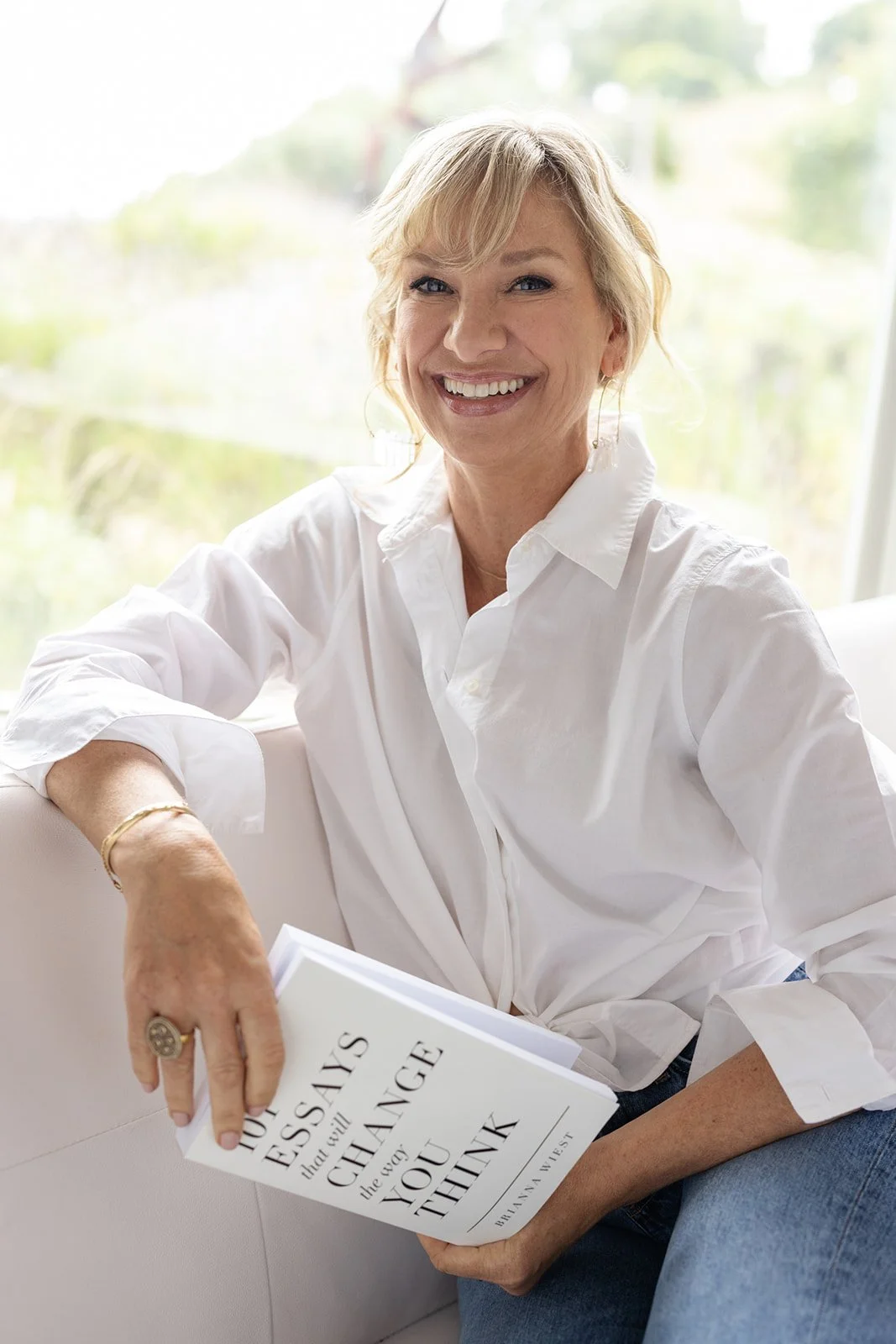
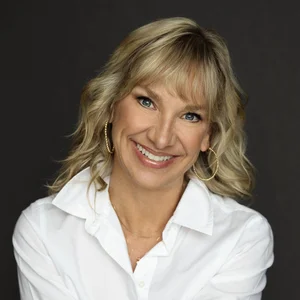
Hi! I’m Sandra
I help women whose lives look good on the outside but no longer feel like their own start choosing themselves again.
Follow & Like
Sign up for The Monthly Calm Clarity Edit Newsletter
Discover More
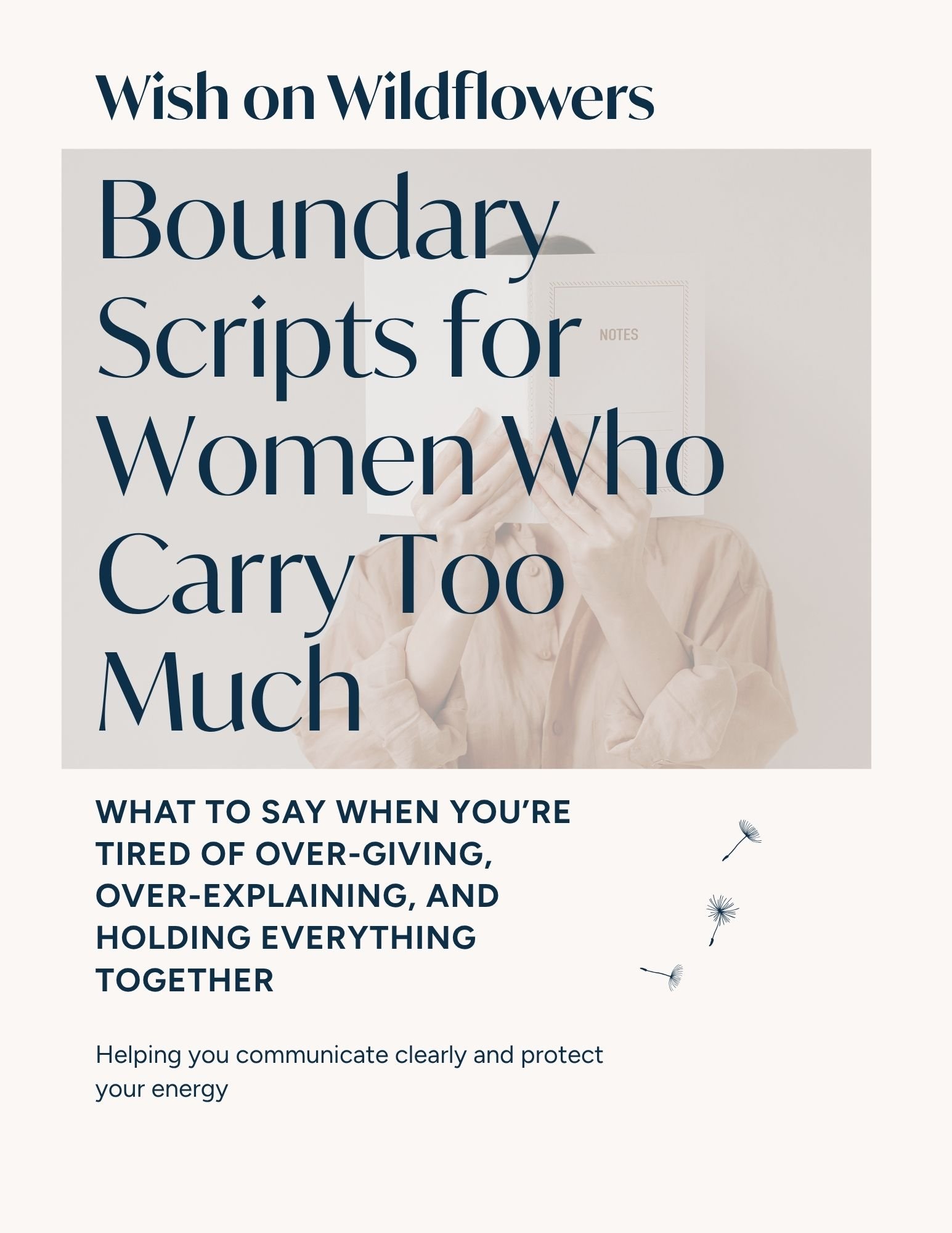
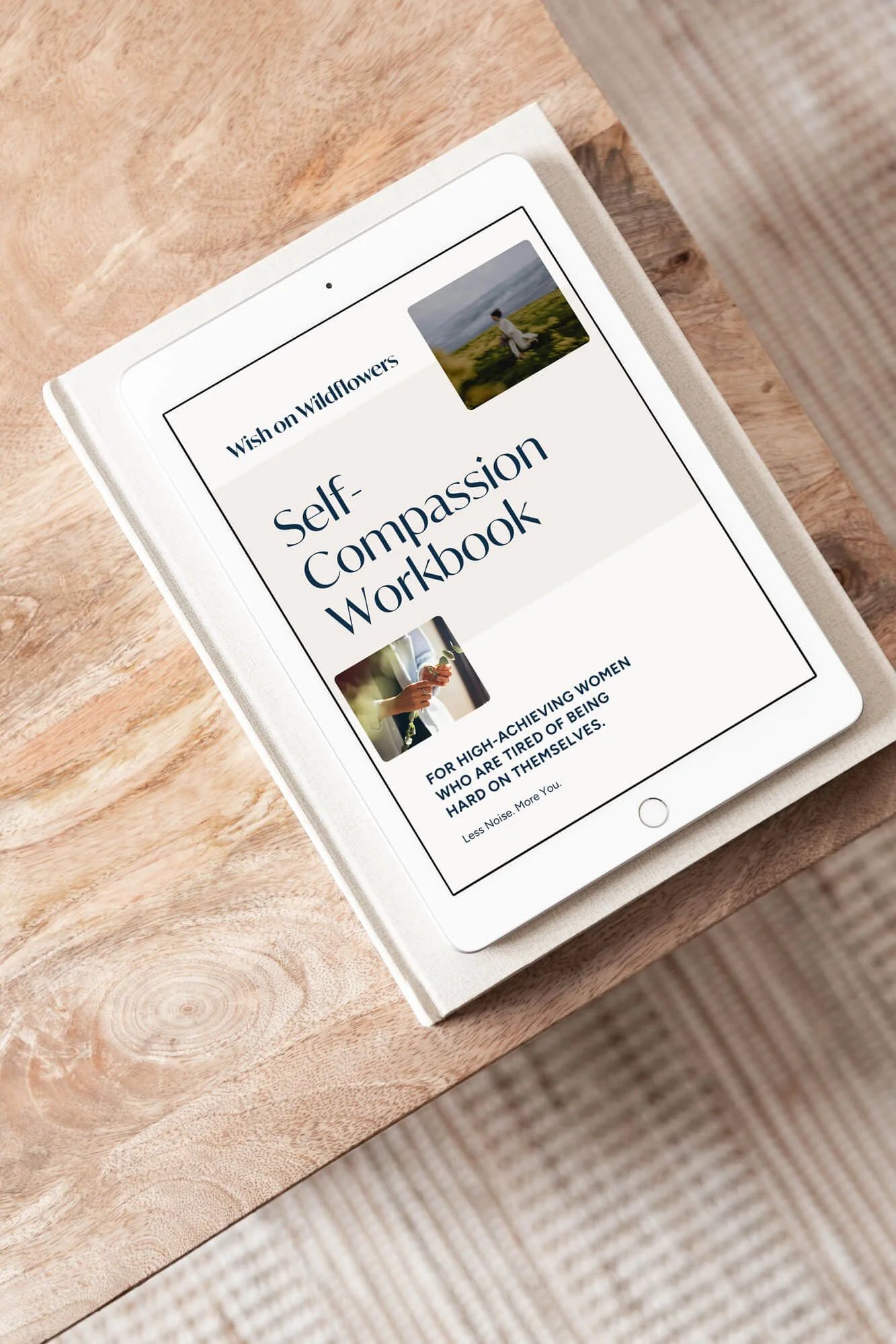
The Carrying Too Much Reset helps overwhelmed women identify the invisible load underneath their exhaustion, stop carrying what was never theirs, and take one clean step toward relief.
A 21-page guide and workbook.