
Why Capable Women Stop Trusting Themselves
(And How To Begin Trusting Yourself Again)
I had to relearn what I never realized was an innate skill. Let me explain.
I used to trust myself to make decisions and figure things out. I had a can-do attitude, a let me get in there and figure it out energy, an I’ve got this bravado that was probably annoying at times.
I was willing to try, willing to make a mistake, and willing to keep at it until I figured it out. There was a confidence in me that didn’t require certainty, although most people probably assumed I knew exactly what I was doing.
Something shifted when I started living less for me and more for the outside world. There were boxes to check and things that needed to be done to show the world I was on the right path. As I approached 30, my fun and frivolous life began to look less like freedom and more like I was stalling adulthood.
Honestly, though, I had conformed long before that. I had done the things. I went to college, got the job, and supported myself. From the outside, I was doing exactly what I was supposed to be doing. I just wasn’t particularly happy.
Sure, the late nights out were fun, but I also craved more. I wanted stability. I wanted love, companionship, and acceptance. I wanted children. I wanted it all. What I didn’t consider was what “having it all” would mean to me, or what parts of myself I might slowly give up in my effort to create it.
I knew marriage would change things because marriage is about compromise. What I didn’t understand was how many opinions would suddenly become part of the equation, or how quickly my need to please would grow from trying to keep the peace within one family to trying to keep it within two.
That was a lot to hold together, especially when you don’t always agree with the man you married, when the people around you have their own ideas about how things should look, and when you are trying to build a life that feels stable while also making sure no one is disappointed.
The details of our stories may be different, yet so many of us know what it is like to keep the picture looking pretty even when, behind the scenes, things feel messy.
The more energy I spent anticipating reactions, keeping everyone comfortable, and trying to hold the picture together, the less certain I became about my own decisions and where I fit in this world I had craved.
I started seeking more opinions and looking for reassurance before making decisions. I wanted to know what other people thought, what they would do, and what made the most sense. It probably looked like I was being thoughtful and in many ways I was. But over time, I became less interested in gathering perspective and more dependent on receiving permission. I stopped trusting that my own voice was enough.
The strange part was that I still looked capable. I was still showing up, handling what needed to be handled, making plans, solving problems, working, parenting, and keeping things moving. From the outside, I probably looked much like I always had.
Inside something had shifted. I no longer felt like the person confidently leading my own life. I had gone from having relatively little fear to feeling frozen.
Choices that once would have felt manageable began to feel heavy. I would ask someone what they thought, then question whether they understood the situation well enough. I would search for more information, then wonder whether I had found the right information. I could feel an answer somewhere inside me and still believe that someone else might know better.
What I didn’t understand at the time was that I hadn’t suddenly become incapable. I had simply spent so long second-guessing myself that I’d forgotten what it felt like to trust my own thinking.
How Women Gradually Lose Trust in Themselves
I don’t think most of us make a conscious decision to stop trusting ourselves. It happens so gradually that we barely notice it, especially because it often begins with qualities we are proud of.
We want to be thoughtful. We want to be fair. We want to consider how our choices affect the people we love. We know relationships require compromise, life requires flexibility, and sometimes another person really does have a perspective we have not considered. There is nothing wrong with any of that.
The trouble begins when consideration quietly becomes self-erasure.
We say yes because saying no feels like it will create more work. We let something go because it seems easier than having the conversation. We choose what works best for everyone else and tell ourselves we will circle back to what we want later. Because each decision seems practical, responsible, or insignificant on its own, we might not recognize what is happening.
Over time, those small moments of being agreeable start to add up. We become very good at reading the room, anticipating reactions, softening what we say, and adjusting before anyone even asks us to. We know what everyone else needs, what will upset them, and what will keep the peace, while our own wants and needs become things we think about after the fact. Even then, we may talk ourselves out of our desires before we have fully admitted they exist, much less embraced them.
That’s one of the ways we begin to lose trust in our own voice. We still hear it, but instead of listening, we cross-examine it. We ask whether we’re being selfish, unreasonable, dramatic, impatient, ungrateful, or simply wrong. We look for evidence. We ask for opinions. We wait for someone else to confirm what we already know because our own knowing no longer feels like enough.
What makes this so difficult to see is that it can look a lot like maturity. It can look like being loving, dependable, easygoing, capable, and willing to compromise. Other people may even praise us for how much we handle and how well we hold everything together. We may be proud of those things too, and many of them are real strengths.
But even our strengths can become the places where we disappear.
Being thoughtful can become overthinking. Being flexible can become never naming what we want. Being dependable can become carrying what was never ours to carry. Being the peacemaker can become making ourselves responsible for everyone else’s comfort.
None of this happens because we are weak. Most of the time, it happens because these ways of showing up helped us hang on to something that mattered to us: love, stability, belonging, approval, or the feeling that everything was going to be okay.
The problem is that what helps us hold a life together can also make us feel increasingly absent from it.
At some point, the question isn’t whether we can decide for ourselves. The question is whether we still believe we are allowed to make a decision without seeking outside approval.
I think many of us do this. We trust ourselves as professionals, friends, mothers, leaders, and problem-solvers, but when the question becomes personal, we suddenly need more proof, permission, or confirmation.
It’s time to value our own guidance, let our voice carry as much weight as everyone else’s, and remember that the wisdom we offer so generously to other people belongs to us too.
When the Role You Play Starts to Feel Like Who You Are
Maybe you are the person who handles things. You can work, parent, solve problems, keep track of the details, think ahead, smooth things over, and make sure life keeps moving.
You are probably dependable and take pride in that. You like being capable. You like knowing people can count on you. What you may not see is how quickly being the person who can handle things became being the person who was expected to handle everything.
There are roles we step into because they are needed, and sometimes because they make us feel needed. We become the strong one, the responsible one, the easygoing one, the person who can see every side, or the one who knows how to keep the peace even when the world feels crazy.
These roles are often real strengths. The problem comes when we become so identified with them that we no longer know how to step outside of them.
I didn’t know how to be the person who didn’t have the answer. I didn’t know how to let someone be disappointed without immediately wondering what I could do to make it better. I didn’t know how to say, “This is what I want,” without also presenting all the reasons it would be fair, reasonable, and acceptable to everyone else.
The more attached I became to being capable and keeping the peace, the less room there was for the parts of me that were tired, unsure, angry, disappointed, or simply wanted something different. Those parts felt inconvenient. They threatened the picture I was trying to maintain, so I learned to quiet them, explain them away, or wait until a better time to deal with them.
Of course, that time rarely came.
There was always another decision, responsibility, or person’s feelings to manage. I wasn’t consciously abandoning myself. I was trying to keep life working. But I had become so focused on holding everything together that I didn’t notice how often I was the thing being left out.
And yet, there comes a point when we must ask whether the role that once helped us feel safe, loved, or in control is still serving us—or whether it has started deciding who we are allowed to be.
Maybe you have been the strong one for so long that you no longer know what you need when you are tired. Maybe you have been the peacemaker for so long that disagreement feels like failure. Maybe you have been the capable one for so long that asking for help feels almost impossible. Maybe you have spent years being who everyone else needed that you are no longer sure who you are when no one needs anything from you.
The roles are not the enemy. They helped us. They got us through seasons that required more from us than we may have realized at the time. We can be grateful for who we became without believing we must remain that version of ourselves forever. We can appreciate the person who helped us hold everything together without expecting that version of ourselves to run the rest of our lives.
How to Begin Trusting Yourself Again
Rebuilding self-trust doesn’t always begin with a major decision. More often, it begins in ordinary moments when you notice yourself looking outside for an answer before checking in with yourself. You might pause before asking everyone else what they think and ask yourself first: What do I already know?
You might make one small, low-stakes decision without polling anyone else. You might allow yourself to have a preference without immediately deciding whether it is practical, reasonable, or convenient for everyone around you. You might notice the difference between gathering perspective and seeking permission.
You can also begin by letting someone else have a reaction without treating that reaction as proof that your decision was wrong. Someone can be disappointed, confused, or disagree with you, and you can still trust what you know.
These choices may seem small, but that is often how self-trust returns. Not through one perfect decision, but through repeated moments of hearing yourself and choosing not to immediately override what you hear.
The Moment I Trusted Myself Again
For me, the moment I trusted myself again came when I decided to end my marriage. The decision made little sense to anyone else, but it made perfect sense to me, even though there were so many unanswered questions and I was scared. So, so scared.
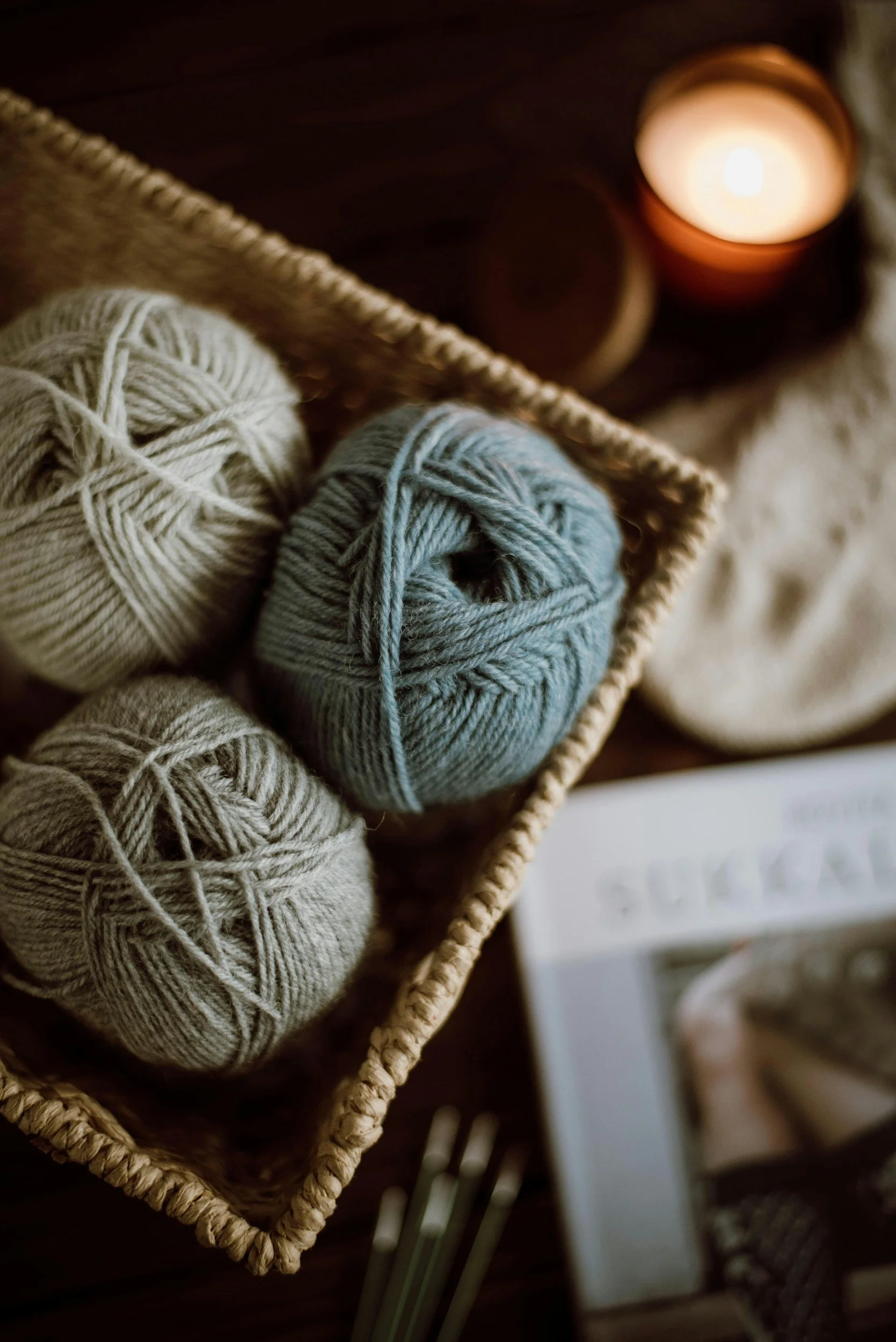
My life had been like a ball of yarn, wound tightly and neatly, sitting in a basket beside all the others—orderly, contained, and appearing exactly as a well-kept life was supposed to appear. But sitting neatly in the basket was not its purpose, and whatever beauty it might become hadn’t yet been created.
Ending my marriage meant allowing that carefully wound life to unravel. It was messy, frightening, and nothing like the picture I had worked so hard to maintain. Yet the unraveling also left me with something I didn’t have before: the freedom to decide what I wanted to create from it.
Like a novice knitter, I picked up the needles without really knowing what I was doing. I had no finished pattern to follow and no guarantee that what I made would resemble the life I imagined. There would be dropped stitches, uneven rows, sections I would have to pull apart and begin again.
But for the first time in a long time, I was no longer trying to preserve the neat little ball for the sake of how it looked in the basket. I was willing to let it become something.
That decision didn’t immediately restore every part of me I had stopped trusting. But the light had come back on. I had proof that my own voice was still there and that, when it mattered most, I could hear it.
The confidence I once had was never about knowing exactly how everything would turn out. It was about believing I could meet whatever came next and figure it out from there. Ending my marriage reminded me of that.
I didn’t have every answer, but I finally trusted that I wouldn’t abandon myself while I found them.
Coming Home to Yourself
Maybe your life still looks neatly wound from the outside, but you can feel a loose thread somewhere. You may not know what it means yet, and you may be afraid to pull on it because you have no idea what else might come undone. There can be a strange kind of comfort in keeping everything looking the way it is supposed to look, even when you are no longer sure it feels like your life.
Coming home to yourself does not always begin with a dramatic decision. It may begin by admitting that something does not feel right, even before you know what to do about it.
It may be as simple as noticing that your own voice is still in the room.
Finding your way back is not about becoming exactly who you were before. It is about remembering the parts of yourself that got quieter, reclaiming the pieces you gradually handed over, and reconnecting with the person beneath all the roles, responsibilities, and opinions.
The current version of your life is not the final version of your life. You are allowed to reconsider what you have built and want something different, even if you once wanted exactly what you have now. You are allowed to make a choice that doesn’t make sense to anyone else. And you are allowed to believe that you will figure things out, even when you can’t yet see exactly how.
Self-trust doesn’t mean knowing exactly how everything will turn out. It means believing you can listen to yourself, make the next honest choice, and meet whatever comes after it.
You have not lost the part of you that knows how to figure things out. It may have grown quieter beneath years of keeping the peace, carrying responsibility, and considering everyone else, but it is still there.
You aren’t learning how to become someone new. You are relearning what was yours all along: how to hear your own voice, believe what it is telling you, and trust yourself to figure out the rest as you go.
“Less Noise. More You.”
A gentle note from me
Everything I share here comes from my own lived experience and the work I am actively doing in my own life. This space is for reflection, encouragement, and gentle practice — it is not therapy, medical advice, or a substitute for professional mental health care. If something in this post lands heavier than you expected, or surfaces something that feels bigger than a tender moment, please reach out to a licensed therapist, counselor, or trusted healthcare provider. Coaching is a beautiful complement to that kind of support, never a replacement for it. You deserve real care.Other content you may enjoy:

* This post may contain affiliate links, which means I may earn a small commission (at no extra cost to you) if you decide to purchase through my links. 
Hi! I’m Sandra
I help women whose lives look good but don’t feel good start choosing themselves again.
Follow & Like
Sign up for The Monthly Calm Clarity Edit Newsletter
Discover More


The Carrying Too Much Reset helps overwhelmed women identify the invisible load underneath their exhaustion, stop carrying what was never theirs, and take one clean step toward relief.
A 21-page guide and workbook.