
How to Trust Yourself Again When You're Tired of Holding Everything Together

You're not controlling. You're bracing.
And there is a big difference.
I do this all the time. The conversation takes a turn and I already know — or I think I know — that if I don't interject someone is going to lose their cool. And since I'm already uncomfortable I jump in. I try to steer the ship in a new direction. Anything to avoid a blow up.
The problem with that solution? It rarely ever works. Emotions almost always still need to be mended. My anxiety spikes anyway. And somehow I get labeled controlling.
If they only knew I was walking on eggshells just to keep the temperature of the room on cool.
That's not me trying to be controlling. That's a learned response to avoid a blow up that leaves everyone feeling uncomfortable. Call it bracing for the worst, or trying to avoid the scene that has played out so many times before you would do anything to avoid it again.
And this bracing is the most exhausting thing you do — quietly, invisibly, every single day — without realizing that while you are so worried about how everyone else feels, you forget to take your own temperature in the room.

I am still learning.
I am still worthy.
I can choose again.
So What Does Trusting Yourself Again Actually Look Like?
Honestly? I'm still figuring this out. I have ideas as I lean more into my own self-trust, but I'm not a self-trust expert. I'm just someone walking a new path and hoping to leave footprints for those traveling a similar road.
What I'm learning is that self-trust starts small. It's the tiny micro-decisions you start making without looking for a pat on the back or someone to validate that you made a good choice. It's starting to trust your own signal again. Lowering the volume of the noise around you and letting that little voice in your head — the one that's been trying to get your attention — have more room to speak.
It's less about external validation and more about how the decision feels. Do you feel lighter? Do you feel pleased that you made a choice without outsourcing it to other people?
And here's the thing — if you really think about it, your intuition and knowing is spot on. That's why you've been able to read the room. That's why you've tried to manage the situation before it spiraled. Your internal guide was flashing signs that said this is not safe. You just learned to act on that knowing in a way that kept everyone else comfortable instead of trusting it to keep yourself safe.
What "trust yourself again" actually means
Self-trust is starting to limit your time in the rooms that feel uncomfortable. Saying no to the invitation from the person who doesn't realize you walk on eggshells every time you're around them.
This is less about becoming a new person and more about returning to the whole version of yourself. The one that knows — and has always known — but somehow found herself repeating behaviors learned years ago, when life didn't make sense and the adults in the room weren't giving you the tools you needed to feel safe in your own decisions.
Over the next four weeks I'll be sharing what I've learned — and am still learning — about quieting the noise. Because I believe less noise, more you is the way to return the smile to your face and the joy back to your heart.
What the Next Four Weeks Look Like
None of this is overwhelming. I promise. Each week has one focus. That's it.
Week 1 — Notice the bracing.
Start to notice when your heart beats a little faster and you find yourself cutting off someone's sentence or diverting the conversation in another direction. Take notice if anyone else in the room is even reacting — or if you are the only one jumping in to save the ship no one else sees is about to sink.
Then ask yourself: what am I afraid will happen if I don't manage this?
You've been here before. Remind yourself if the saving actually helps or not. Then ask yourself who it's helping. If it's not helping you, it's not helping anyone.
Week 2 — Trust your own signal.
This week we give the tiny voice the floor. We quiet the noise around us so our truth gets louder than the static. We make micro-decisions and pay attention to how we feel after we stop outsourcing our decisions and feelings to other people.
No more Googling. No more texting your friend at 9pm with okay but what would you do. Just you and what you already know.
Week 3 — Stay open without over-explaining.
This might be the hardest week. It's when you start showing up with your own thoughts and speak them out loud. The sentences can be short. No thank you is a full sentence. This is when you start letting that small voice that's been trying to get your attention be heard by others.
We are also not going to try to manage anyone's reaction by over-explaining ourselves. That's exhausting. And our body doesn't feel good when it's exhausted.
Week 4 — Let ease and joy feel safe.
This is the best week — and it will probably still feel a little uncomfortable at first. But you should feel lighter, less exhausted, more like yourself. This is the week we let things feel good. We stop second guessing or waiting for the other shoe to drop. We just enjoy. We find ourselves smiling more and wondering why we didn't lean into self-trust sooner.
You're Not Starting Over. You're Coming Back.
This is not about becoming someone different. This is about remembering who you were and what you loved before the learned behaviors — before you started outsourcing decisions you thought were keeping you safe.
This place you find yourself in now is not anyone's fault. There is no shaming yourself for trying to keep everyone else comfortable while you slowly let yourself be swallowed up by bigger personalities.
You're here now. And it's your time to take back your life so it feels good to you.
I'm not going to tell you this is easy. I'm still in it. Still catching myself steering ships no one else sees sinking. Still noticing when my heart speeds up and I'm the only one in the room who thinks something needs to be saved.
Nothing over the top. Just noticing your reaction a little sooner. Trusting you don't need to save the room. And slowly remembering what it feels like to come home to yourself through self-trust.
A next step
If you recognized yourself anywhere in this post — the eggshells, the interjecting, the over-explaining — the next gentle thing to look at is your boundaries. Not the big dramatic kind. The small everyday ones that have been slowly costing you your peace.
My Boundary Scripts for Women Who Carry Too Much is exactly that. Real words for real situations so you don't have to figure out what to say in the moment when your heart is already beating faster than it should.
Grab it here.
And if you want more of this in your inbox every week — no fluff, just the real stuff — come find me in The Calm Clarity Edit.
“Less Noise. More You.”
Frequently asked questions
What is the difference between being controlling and bracing?
Controlling comes from wanting power over a situation. Bracing comes from fear — specifically the fear of what happens if you don't step in. If you're managing situations to keep everyone comfortable while your own anxiety spikes, that's not control. That's a learned response to an environment that didn't feel safe. There's a big difference and it matters.
How do I know if I'm bracing or just being thoughtful?
Thoughtful looks like considering how your words land before you speak. Bracing looks like monitoring everyone else's emotional temperature while completely ignoring your own. If you finish the interaction more drained than when you started, and nothing actually got better, you were probably bracing.
What if the people around me actually do need managing?
Sometimes a situation genuinely needs someone to step in. The question is whether you're the only one who ever sees it coming, whether it actually helps when you do, and whether it costs you every single time. If the answer to all three is yes, the problem isn't the situation. It's the pattern.
Is it possible to rebuild self-trust after years of not having it?
Yes. It starts smaller than you think. One micro-decision you make without asking anyone. One moment you let your no be a complete sentence. One room you decide you don't have to keep comfortable anymore. The trust rebuilds from evidence, and the evidence starts with the smallest choices.
Why do I feel guilty when I stop trying to manage everyone else?
Because somewhere along the way you learned that keeping everyone okay was your job. Guilt is just the old pattern noticing you're doing something different. It doesn't mean you're wrong. It means you're changing. Stay with it.
A gentle note from me
Everything I share here comes from my own lived experience and the work I am actively doing in my own life. This space is for reflection, encouragement, and gentle practice — it is not therapy, medical advice, or a substitute for professional mental health care. If something in this post lands heavier than you expected, or surfaces something that feels bigger than a tender moment, please reach out to a licensed therapist, counselor, or trusted healthcare provider. Coaching is a beautiful complement to that kind of support, never a replacement for it. You deserve real care.Other content you may enjoy:




* This post may contain affiliate links, which means I may earn a small commission (at no extra cost to you) if you decide to purchase through my links. 
Hi! I’m Sandra
I help women whose lives look good but don’t feel good start choosing themselves again.
Follow & Like
Sign up for The Monthly Calm Clarity Edit Newsletter
Discover More


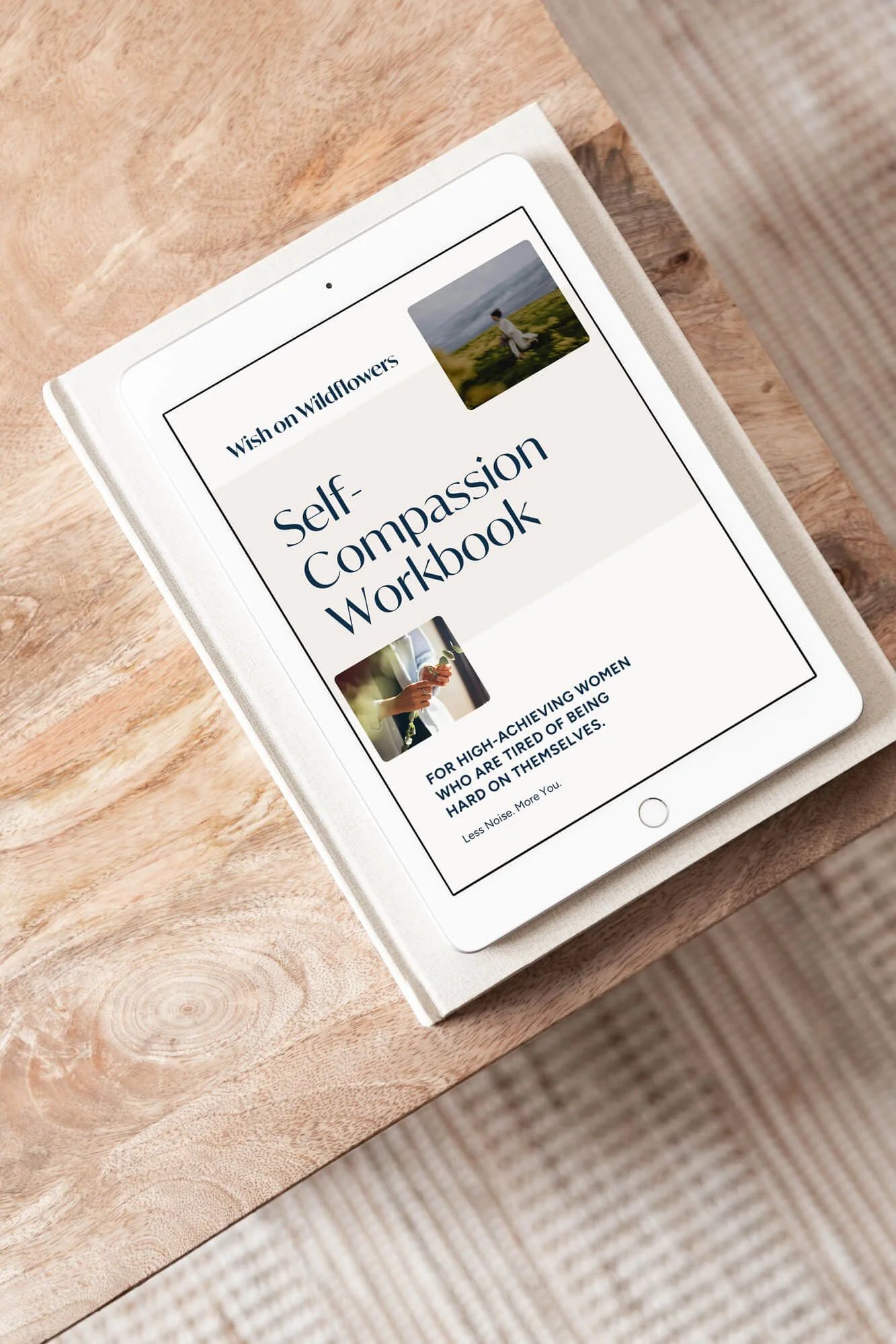

The Carrying Too Much Reset helps overwhelmed women identify the invisible load underneath their exhaustion, stop carrying what was never theirs, and take one clean step toward relief.
A 21-page guide and workbook.